EDUCATION POLICY
2026 Co-Convenors
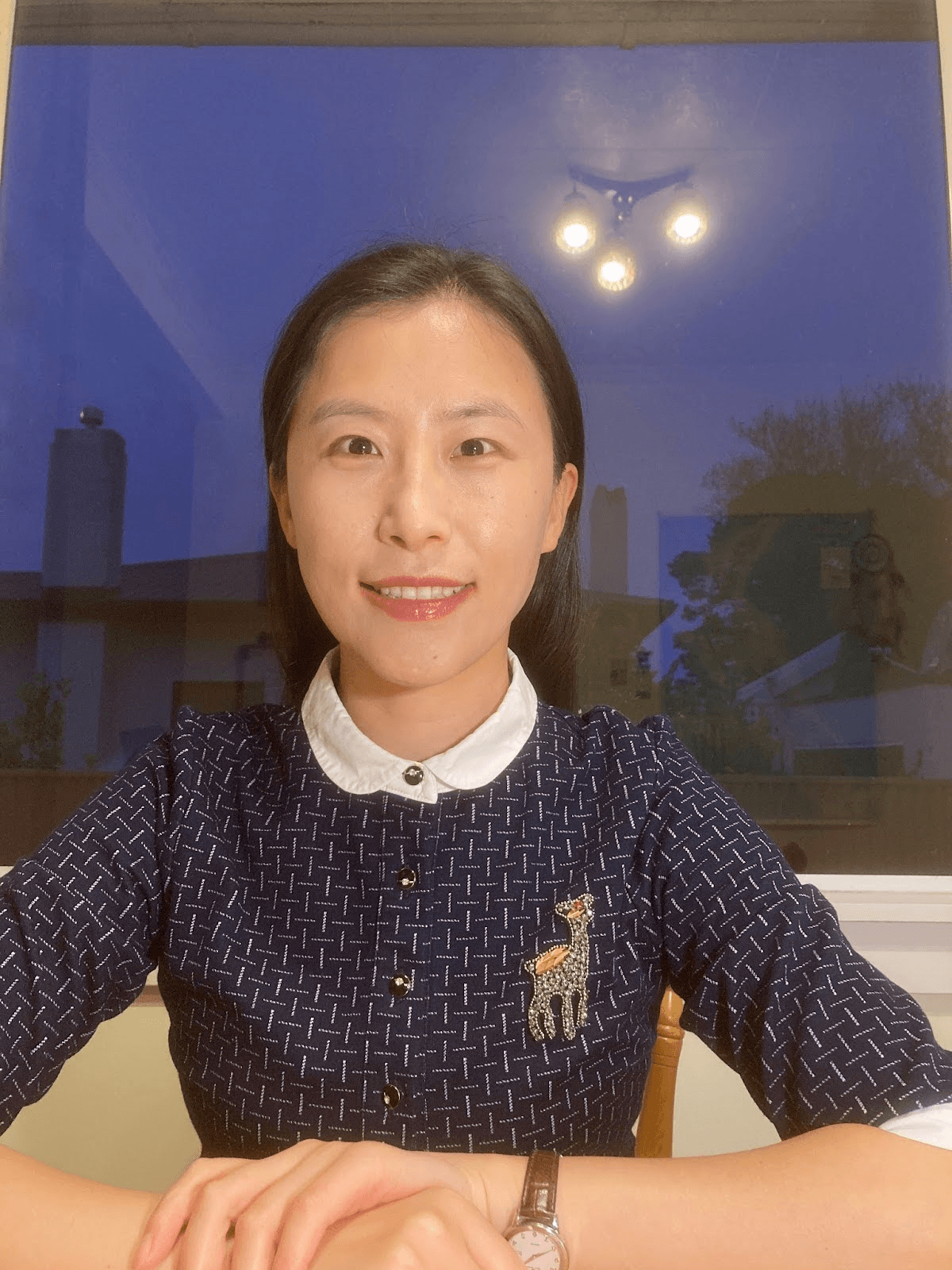


Huidan Niu
Dr. Huidan Niu is an emerging researcher in education policy. Her PhD from Massey University (New Zealand) and experience with China's educational system allows her to learn from and contribute to both. Huidan is constantly developing her research skills, tackling topics like teacher professionalism and the impact of teacher unions. She has presented her findings at international conferences and co-authored publications, always striving to improve her communication and analysis. Huidan is passionate about education and enjoys sharing her knowledge. She currently lectures at IPU New Zealand and mentors students, fostering a supportive learning environment.
Contact: niuhuidan@gmail.com
Taylor Hughson
As a lecturer in the School of Education, I teach and conduct research in three main areas: education policy, curriculum, and literacy. Across these domains, my primary concern is with the cultural political economy of education — that is, how is education both embedded within, and how can it potentially disrupt — broader cultural, political and economic realities? I endeavour for my work to have both theoretical and practical applications, and am always keen to talk to current teachers about these topics.
I am interested in taking on doctoral students in the following areas
Curriculum theory and practice
Education policy — inclduing its development, enactment and evaluation
Teacher PLD
Globalisation and education
Educational assessment and its intersection with curriculum and/or pedagogy
Subject English
Literacy — including literacy policy and supporting student literacy development in schools
Any topics related to the above
Before coming to Te Herenga Waka VUW, I worked as a secondary teacher in Auckland, Lower Hutt and England, mostly teaching English. I completed my doctorate on recent reforms to England's teacher policy at the University of Cambridge in the UK, supported by a Woolf Fisher Scholarship. I have also taught at the University of Sydney, and have worked as a researcher for a variety of organisations.
I hold an affiliation as a Senior Research Associate at the Centre for Education Systems in the UK, and serve as the early career representative on the board of The Curriculum Journal.
Contact: taylor.hughson@vuw.ac.nz
Bronwyn Wood
Bronwyn researches in the areas of youth participation, citizenship and social science education and curiculum and education policy studies. She was previously a geography and social studies teacher and has contributed to Aotearoa New Zealand curriculum development in recent years.
Current research
2025 till now. Threats to Democracy. Teacher's perceptions and practices. A comparative study with Norway.
2024 til now. Everyday peace-making: Aotearoa New Zealand young people's knowledge and practices of everyday peace-making. A pilot stdy.
2024 till now. Climate misinformation: Interdisicplinary perspectives. VUW multidisciplinary fund.
2022 till 2024 The Civic potential of climate Mobility (HUMANE-CLIMATE https://research.tuni.fi/sparg/projects/) Associate Investigator with Tampere University, Finland
2021-2024 Critical Times: Producing the global graduate in a pandemic (with Deakin University, Monash University and VUW) Associate Investigator see https://redi.deakin.edu.au/projects/critical-times-producing-the-global-graduate-in-a-pandemic/
2017 – 2020 Citizenship in Aotearoa New Zealand: Young people, belonging and changing times. Marsden Fund Award
2016-2018: Transitions to University: Navigating Assessment practices and curriculum knowledge. URF Strategic Fund. Associate investigator with Dr Sue Cherrington (Principal Investigator) and Dr Michael Johnston.
contact: bronwyn.wood@vuw.ac.nz
Heading
Enter your content...
Education Policy Seminar 2023
Judie Alison, Convenor Education Policy SIG
NZARE’s Education Policy SIG held a seminar on 19 May which tackled the question of whether it was time to abandon the Beeby/Fraser ideal as our underpinning goal. Professor John O’Neill had set up a provocation which suggested that given there have been marked changes in the context and our thinking since 1939, the statement may no longer adequately serve as an aspirational and inspirational call to action. If that was so, he asked, with what should we replace it?
After an exploration of the provocation by John O’Neill, six speakers tackled the question from their diverse viewpoints. They were Mere Berryman (Waikato), Bronwyn Wood (Victoria), Fuapepe Rimoni (Victoria), Judie Alison (ex-PPTA), Ellen Dixon (NZUSA) and Mark Potter (NZEI). All presenters had written papers which were pre-circulated to participants. This encouraged lively discussion among the 35 participants.
The final discussion concluded that Tomorrow’s Schools, by leaving so much to Boards, had damaged our ability to ensure equity across the system. We were agreed that an education system should be judged by how well it meets the needs of the most disadvantaged students, not by how it meets the needs of the majority. No principal or Board can claim success if anything they are doing in their school damages any other school in their community or across the system. We also agreed that we need a Finland-style cross-party consensus so that schools are not subject to constant policy change. Click on links to view papers from this event.
John O'Neill's introductory paper
Mere Berryman's paper
Ellen Dixon's paper
Judie Alison's paper
Bronwyn Wood's paper
Fuapepe Rimoni's paper